top of page

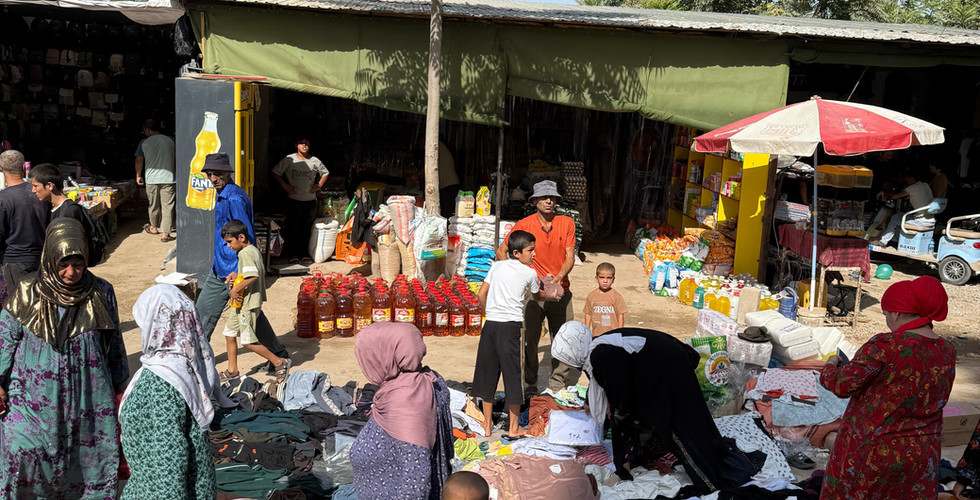
No matter how much I travel, I'm still amazed to see, as you cross borders, how the people change.

The people change in nature and look. The Arabs in the Middle East have a distinct look, and now, as we head back north through Turkey, the skin gets darker and the faces rounder.

Religion is a big part of Georgian life.


Our destination was now focused on getting into real Asia, and so Turkey was just a passing point on our journey. We knew we had to pass through the Pontic Mountain range, but didn’t think anything of it.

We climbed to the top of the range (3900m), and the snow was getting worse, so we stopped for the night at a Petrol station car park along with other Trucks.

The next morning, the engine was not starting, and after a bit of sign language, we had a support crew on their way to us.

The Diesel had congealed because of the cold. We were told it reached minus 20 degrees.

They then made a fire under the truck

A change of filters, a fire under the engine sump and a serious amount of warming with a blow torch, and we were off. You wouldn’t see that in the Western world!


The border crossing into Georgia was a casual affair and small. It was bitterly cold, and snow everywhere. As we drove through a small tunnel, we entered Georgia. We left a bleak and barren Turkey, and suddenly we were confronted by a wall of neon lights flashing advertising Casinos and gentlemen's clubs… all competing for our attention. Money changers swamped our truck whilst fake officials with odd lanyards hanging around their necks demanded we buy vehicle insurance that we already had.


It was like a down market, Blackpool.


Flash cars were everywhere. The whole thing shouted Mafia to us, we drove through this border enclave and on to the nearest town, Batumi, which was much the same.


We headed east, but the snow got worse. This is a brutal place for weather, and this was exceptional. Trees and power lines were down, and we decided to haul up and chose a stadium car park just outside a town.

It was quite scary, so close to civilisation but so far away


We parked as far away from the road as possible for privacy and settled down to let the snow pass. The next day, the snow was waist-deep, and we were stuck. I decided to walk to the road to get help, but after walking a few meters, I realised I couldn’t make it, and if I got halfway and got stuck, I was in trouble. We had water and food, and so we waited it out for 4 days. That’s a long time to be inside a small box?


We tried standing on the roof and trying to get help, but everyone had their issues, and no one stopped to help.


Eventually, the snow started to melt and using 4-wheel drive and all Diff-Locks, we managed to get out, and our relief was heartfelt.


Because of the weather in February and some issues back home, we flew back to our home in Spain and returned to Georgia in May, and it was still cold, but we started to get a feel for the place and its people.


Georgia is a tough place to live, and the people have a hard time with the weather, and not much happens. The people appear coarse and not at all friendly. I think it’s a hangover from the days of Russian rule.


It’s been 34 years since Georgia had their referendum, and 99% of people voted for independence.

A street vendor battles the cold.


That said, we still had moments of kindness and had regular offers of homemade Vodka to share with people as they went about their daily work routine!


The Georgian taxi drivers also make a point of crossing themselves several times when they pass a religious building. I wondered if it was some kind of insurance, as the driving was appalling and scary to be sitting in a taxi or driving our truck.


The Joseph Stalin Museum at Gori, Stalin’s birthplace, was an interesting insight and was filled with ostentatious vases, figurines and other gold-laden trinkets gifted to Stalin by other world leaders.

Am I missing something?

A fancy Chess set for the leader.

Stalin's private railway carriage

 That would keep him warm


Overall, Georgia is a poor country that is ruled by some kind of Mafia, and the divide between rich and poor is striking. Many farmers tend their fields by hand, and you can feel the pain the bleak weather must inflict on them.


Tbilisi, the capital, is a lacklustre place with a few highlights, but not a place to dwell for long.


On the upside, virtually everyone makes wine. It’s not strong and it’s a staple, and its said, most people drink 1 to 2 litres a day?

Wine is on sale everywhere, from street vendors to high-end wine tasting cellars


Next up was Armenia, and even the capital, Yerevan, didn’t inspire much. It was like a poor Georgia, if that’s possible? And we headed for Russia to make the transit into Kazakhstan.

This is one of the best parkups we have ever had, and it was in Armenia.


The road to the Russian border, called the Military highway, was through a mountain pass, and we had snow, again! The road was winding and wet, there was a gale blowing, and the drops off the side were scary. There are times we wonder why the hell we do this.


Exiting the border from Georgia into Russia, there was an IT power outage for 6 hours. It was the day Ukraine blew up the bridge and attacked the Russian fighter jets. The rumour was, the border was about to close, and we would be stuck.


It took 15 hours to get through, but we did, completely exhausted.


Russia offered a lot of desert area that was quite dull, but then interspersed with an odd cosmopolitan town like the town bordering Kazakhstan – Astrakhan. This was a leafy, feel-good town with modern shops, restaurants. Great Architecture, a huge concert hall, and it was extremely clean.  It’s a place that would be liveable for a Westerner, if you speak Russian, that is, but because of the current situation, we wanted to get out as soon as possible, although we were probably in no danger, as Russia has a land mass almost twice the size of Europe and has a population of 144,000,000.

Ferry crossing en route to Russia


A small aside, I was stopped by the cops early one Sunday morning, and the usual document check was carried out, and then the cop wanted me out of the cab. I suspected he was asking for a bribe, but he asked me to breathe on him to make sure I hadn’t been drinking….. I hadn’t.


Kazakhstan was so inviting at this point because of the potential issues, and so when one of the military guards asked us for a gift, not money, he just wanted something foreign, and as we had dozens of coins and notes from other countries, we gave him everything we had.

He was delighted, and so were we when he told us he had never met or seen a passport from the UK; we don’t travel that way, apparently.

Random shots in Kazakhstan

Soon we settled down and started the long journey from south-west Kazakhstan to the South-East. The bit in between is just open plain and desert. When I say the bit, I mean the 3000km of nothingness. It took us a week, and we spent the days driving the terrible roads and the nights parked up at truck stops.  

At the truck stops, as always, we were big news, and we tried to talk to some of the drivers, some of whom had travelled from Poland. We couldn’t communicate well enough to find out what they were hauling.

A Georgian church. They were everywhere.


Our goal was to get to Almaty, a town in the southeast and just about the only town and being the gateway to some more interesting scenery.


Once again, as we progressed east, the people looked different. They started to look Mongolian.


Later, we met western-looking people who identified as Russians, although Kazakhstan was a part of Russia until it gained sovereignty in 1991. The Russian-looking Kazakhstani people didn’t seem to mix with the Kazakhs, who looked Mongolian.


Whatever their look, it’s a huge chunk of land for a mere 20,000,000 population.


We love these warning signs. They are all over Kazakhstan.

Whilst having a small truck repair in Almaty, I asked our Russian mechanic if it got cold in Almaty. His reply, “Not really. It might get to Minus 20 degrees C, but in the north, it regularly gets to Minus 45 degrees C.

We started playing a game to see who could spot a new one first.


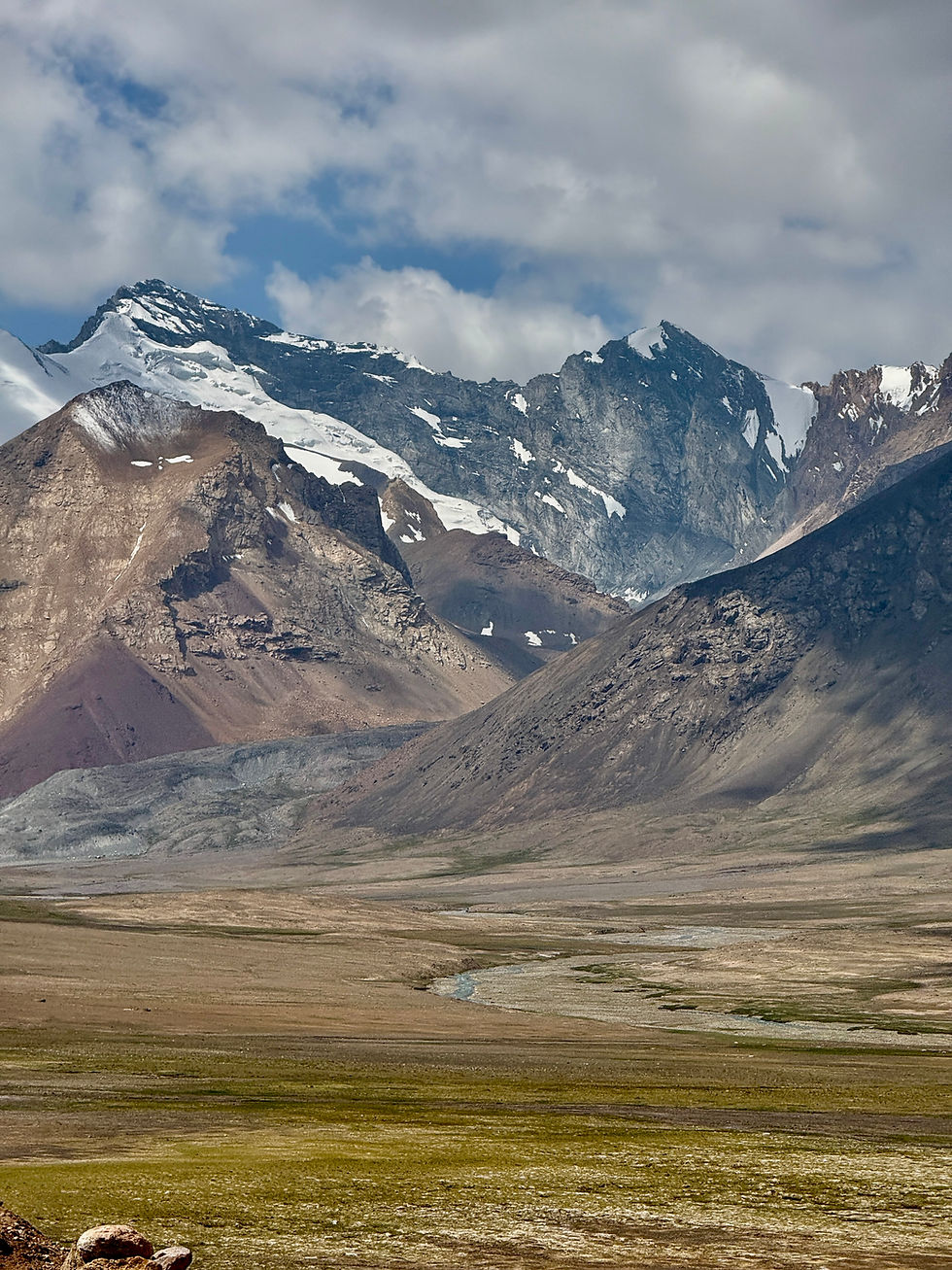
I am writing this as we wait for my Chinese visa, and we will be heading south soon, and the scenery will be a lot more dramatic.


That one is real
That one is real

It’s been a long few months.


Till next time, and as always, thanks for reading this. I think the next one will be awash with colour and beautiful photographs.


This was sold on every road in Georgia. We have no idea what it is.


No problem, the cigarette ash adds flavour to your bread.


No matter what else, every shop has Vodka.


Some areas of Armenia had Storks nesting on the telegraph poles.


Hangovers from the days of Russia are plentiful


Sheep and Goat herders use Horses to herd their stock.


 Father and son about their business.


Updated: Apr 13, 2025

We raced out of Oman to watch a stage of the Dakar rally back in Saudi, and it was quite a distance to get to the remote location. Fortunately, we had plenty of fuel as at the location of the rally stage, we were told the nearest fuel station to our location was 200 miles away.


The Dakar rally. Assorted vehicles awaiting their turn to start.


The Dakar rally was a pure testosterone and adrenaline rush, and the enormity of the whole thing was a real spectacle. As the Rally is mainly viewed online, we were able to park right by the starting post of the 15th stage. The power of the Cars, Trucks and Motorbikes was breathtaking.


A room with a view. Looking out of our safari hatch as another truck roars by.

Several helicopters were hanging around, which were apparently to airlift any drivers in need of hospital treatment and when we saw them set off, we understood why.


Like a schoolboy, I was thrilled to climb into the cab of one of the Dakar trucks.

The Dakar rally just takes up a small part of the desert in Saudi and it is vast. We often saw teams of bulldozers on the road, clearing the drifting sand that built up, caused by the crosswinds.


We normally look so big and strong but at the side of these guys, not so much.

The enormity of the Arabian Peninsula is its size and travelling it's some experience. It's vast!

Saudi Arabia takes up around 80% of the whole Arabian peninsula, and 95% of that is desert or semi-desert. It covers some 2,330,000 sq. km. That is against the UK, which covers 244,000 sq km in total.


The vast, space of the Saudi desert.


It's a brutal environment, and we were there in the winter. The summers must be unbearable.

On several occasions, we were able to just pull off the road and drive randomly into the desert and then we were able to lay in bed, looking at the stars with zero light pollution. That was special.


We did, however, ensure we could see our tyre tracks and hoped for no sand storms as it would be easy to get lost with no landmarks to guide us.


A camel herder in the desert.

The cities of Saudi Arabia have progressed, though. Women are now able to drive, and they don't have to cover completely any more, although most do because they like to apparently, or that's what the men told us? We never heard that from a woman.


Charlotte wore a head scarf around religious buildings, but mainly, she dressed as a Western woman with no problem.


We found that all over the Peninsula, men would only talk to me and would happily shake my hand but not Charlotte, who became invisible in most situations involving encounters with Saudi men. 


Saudi women are still not allowed to apply for a passport without their husbands.

Saudi Arabia will also only recognise Islam and revoke all other religions.


Visiting Al Ula was a highlight; Vast.


Saudi gave way to Jordan, and we went straight to Aqaba. Aqaba, the area Lawrence of Arabia took from the Turks, as I remember from the film?


It's now a low-level holiday destination for Saudis and Jordanians, on the Red Sea, with Egypt and Israel visible across the water.


Wadi Rum (Wadi - river bed) was spectacular and offered opportunities to see vast deserts and mountains in the same vista, but the real jewel is, of course, the ancient city of Petra, and it was a delight to stay locally and enter the site in the early morning and have almost the whole place to ourselves until the tour buses arrived and we exited left!


Getting to Petra early meant we beat the crowds, but not the guy selling Camel rides.


Seeing one of the seven wonders of the ancient world is always special.


The detail of the carving to the stonework was stunning.

The entrance into Petra.

After Petra, we headed north and found a park up in the perfect off-the-road spot for the night near the Dead Sea, which seemed idyllic. All alone and so peaceful until a knock on the door around 10.00 pm and three guys in plain clothes telling us they were police. I asked for ID, and they fled. Very unnerving. What was their angle, I wonder?


Time to lower the tyre pressure to drive in the soft sand.

That was about us in Jordan, and we set off for the Iraq border to find the fuel stations had no fuel. Then, 20km (12 miles) from the border, we had a tyre blow out. The noise from our enormous tyres blowing out was incredible and scared us both. We changed it, but we now had no spare and faced a 300-mile drive to Baghdad before we could get a replacement.

To make matters worse, when we crossed the border, we were told that tourists could not buy fuel in Iraq and we had to rely on a friendly local guy getting involved, and we managed to get 200 litres. Enough to get us to Baghdad and a bit spare.


Can you fix it?
Can you fix it?

Iraq is the land of `moustaches. Every man seems to have one.


After travelling around 25 km, we were picked up by the military, and we had our one-on-one military escort. This is mandatory as the road from Jordan runs through a desert area that is still frequented by ISIS. 


The end of the military escort. It was exhausting.

It was un-nerving having a military escort.

All was good apart from the escort stopping every 20 or 30 kilometres and changing to a new crew and vehicle who had to photograph Charlotte and me, the truck, our passports, and then make endless phone calls before setting off again. I did want to suggest that sitting at the side of the road wasn't the best idea and could give ISIS a bit of an advantage should they wish to ambush us.


Whilst I am getting the final sign-off after our escort, Charlotte has another agenda.

The trip took 10 hours. We were knackered and headed for a secure park up in a theme park, a carpark we knew of that was guarded and had been frequented by other travellers, previously.


Baghdad is a very cool city, though; it bristles with energy. The downside is, that it's filthy as is much of Iraq. Plastic waste is dumped on industrial levels. It's terrible.


The guy that helped us with the fuel when we came into Iraq, invited us for dinner at his family home.

After dinner, they took us for a drive around Baghdad and we called at this institution. What a place, everyone drinking tea and eating ice cream.

One of my favorite photographs. I tried the Shisha but it wasnt for me.


Throughout Iraq, there are military posts every 200 meters.

It's scary and reassuring at the same time.


The call to prayer is ever constant, the streets were filthy, and the buildings were random and run down/falling. They have packs of hungry dogs scavenging for food everywhere, but we loved it.

There is a great street in the old city centre, Mutanabbi Street. It's full of bookstores and cafes. The bookstores spill out onto the pavement and people browse and stop for coffee.


An ariel view of Mutanabbi street. Magical.

A local tea stop on Mutanabbi street. Their was a couple of women, but mainly men.


We heard the book sellers leave the books out at night because, they say, readers don't steal and thieves don't read. 


Whilst staying in Baghdad, we made a journey down to Babylon. The hanging gardens are gone, but we saw one of Saddam Hussain's palaces, although it is now just a shell.

The ancient city of Babylon, somewhat still intact was fascinating.


The rebuilt, ancient city of Babylon.

On the road to Babylon, we saw the black flag being displayed along the road, this being a sign of religious (Muslim) revolt and engagement in battle. A little disturbing, I have to say. It almost put me off my lunch.


Back in Baghdad, we also got our tyre replaced and negotiated in a filling station to get another 250 litres of fuel on the black market to get us out of the country.


My last job before leaving town was to visit a liquor store. There are only a few, and I tracked one down, but it looked closed. On closer examination, it was shrouded by black steel sheeting. The only way to get any liquor was to knock on the steel shroud, and the guys inside opened a letter-box-sized opening. I had to cross my chest to prove I was Christian as they can't sell liquor to Muslims (a bit weak on the security in my opinion?) and then they allowed me to buy a bottle of Gin that was passed through the slit in the steel. They explained they were constantly under attack from the Muslims and they were about to close as they feared for their lives. They told me to hide the Gin on the way back to the truck as it could be an issue if seen.


We then headed north, overnighting at Samarra to see the spiral Minaret.

It is also the location of a Shi'a Muslim pilgrimage centre.

We parked in the secure parking area, as instructed by the military whom asked for our passports. This time, as it was our final destination for the night and so i jumped down from the cab, and was told in no uncertain terms by the senior officer that my shorts were unacceptable and I must wear trousers. I decided to get changed, as his gun looked more important than my shorts.


The spiral minaret - Samara

We saw busloads of women coming to pay homage to the sacred mosque in the area (we couldn't visit, not because of my shorts but because we aren't Muslims). All the women are dressed in Black Burkers.


Initially, we were confused as each group of women had small pieces of coloured fabric attached to the back of their heads. Each group had the same colour fabric attached.


We worked out eventually; it was to identify who was in your group. A group of women in Burkas look all the same from the back....... and the front, come to think of it.


The Martyr monument - Baghdad.

It was soon time to head north to the Turkiye (or Turkey if you prefer) border was around 300 miles (500 KM).


We made it safely after passing around 20 military checkpoints and had our passports checked by everyone.

Our lasting impression of Iraq's people. Kind, and generous, and we had been treated to dinner with a family who also took us for a tour of late-night Baghdad that was simply fascinating, but we wanted to move on.


Our journey from initially leaving Turkiye in November to returning to Turkiye in February we covered around 10,000 miles (16000km). What an adventure.


We enjoyed our time but are glad it is over.

And now, we are safe.


Thank you for taking the time to read this.


Let me know your thoughts. I love hearing from you.


We are currently taking a short break before we set off again in May.


Al Ula, Saudi Arabia.


The desert highway - Somewhere on our travels.


The old town of Jeddah.


The desert near the Dakar rally.

Mutanabbi street
Mutanabbi street


A few of the streets of Baghdad.


The building made of mirrors is Saudi. It's a confrence centre/concert venue.

It's hard to get the actual perspective on this place.


One of saddam Husseins palaces, now just a shell.

The desert was mesmorising.


Leaving Iran gave us no time to rest. Next up was a short blast through the bottom corner of Iraq to get to the safe haven of Kuwait, but we had to pass through Basra, and the temptation to stop was too great. We needed a rest anyway; from leaving the Iraq border, we had dozens of police checks and passport checks, and so we parked on the very modern Corniche by the waterfront in Basra. It wasn't what we were expecting at all.


The Arabian Peninsula is vast. This photograph does not tell the real story.


The Corniche was an area for locals to promenade, picnic and show off their fancy cars.

We were a distraction to normal business, and we were inundated with knocks on the door and a big welcome. It was lovely but got annoying when we wanted to get into our pyjamas later in the evening.


Traditional Iraqi breakfast.


We were glad to have the family with us. The menu was a little challenging.


A very kind family took us out for Breakfast the next morning at a traditional Iraqi restaurant, then took us to see cousins up country for lunch in the marshes. They then allowed us to rest but brought us dinner to our truck. 


An elder relaxes before taking lunch with us.

Lunch is traditionally served on the floor.


Everyone shares and eats with their hands.


Nearly done, and then it's time for Chai.


Chai brewing.
Chai brewing.


While out on our family drive, the oldest son asked if we minded if he played his music on the car stereo. We said no and looked forward to hearing some Iraqi music. We laughed when he played Dancing Queen by Abba. It's a small world.


Other than the Corniche, Basra and the surrounding countryside was a chaotic mess, and a plethora of plastic and associated rubbish was everywhere. Packs of dogs scavenged for food. Such a shame.


Kuwait was next and was so clean and precise against the chaos of Iraq. 

When we eventually got through the border, we were so tired that we opted to sleep in a residential area car park soon after the border. 


Kuwait city from the massive bridge


The whole country appeared wealthy, and all the houses were huge.

By mid-morning the next day, we had a range of food options for lunch after several people dropped by to give us food and welcome us to their country.. The strangest was a lady in a maid's uniform from one of the local big houses who brought us a huge silver tray full of food and a Thermos flask of Kuwaiti coffee but spoke no English.


Even the water towers are magnificent in Kuwait.


The problem came the next day when we left; we didn't know to whom to return the tray and flask. 


Kuwait City was bristling with money, and it has a bridge to access the other side of the bay that is an amazing 22.5 miles long (36km). One of the longest in the world.


We are never short of visitors, and these guys popped in to say hello.

The modern financial district was truly amazing and a rival to any financial district anywhere.

This was such a contrast to what we had seen previously in Iran and Iraq, and yet all three countries have wealth from oil and gas. 


Saudi Arabia wasn't far away, and the drive down from Kuwait through the barren desert lands of Saudi's north east corner wasn't much fun.


Bahrain offered us a chance to mingle with the many ex-pats working in Oil and Construction jobs, living in gated communities with all mod cons, domestic help, and a range of sporting and eating excellence to be enjoyed, including Alcohol being available at a price!

Bahrain is dull as an area, we thought, with little to see and quite a small area, but the luxurious living and the sporting and culinary options make it an attractive option for some, I guess.

Not paying taxes must help as well.

After another dull drive through Saudi, we arrived in Qatar.


We were often randomly stopped whilst driving and offered Chai and Dates

The norm is to throw out a blanket to sit on.

Another wealthy Oil enclave, Qatar defies everything you think of. Wealth pours from every corner, and the men are in their gowns and colourful red and white check Dish-dash head gear.


The women, however, when you do see them, which isn't often, in their dower black burkas, don't stand out so much apart from the pure idiocy of wearing a full black gown when the temperature can reach 40+ degrees.


Most people from the Arabian peninsula are of Bedouin/tribal descent, and now they are all just rich, and very few Saudi, UAE or Qatari people do a job. They employ migrant workers from India, Pakistan, the Philippines and Bangladesh to do everything, and I mean everything.

The pecking order is the Indians from the Kerela area of India are generally well educated and get the better jobs, the Philippines work as domestic help and the Bangladeshi community getting the shit jobs, literally. 


A lovely touch was the Indian men would congregate in car parks, open spaces, in fact anywere they could get light and would play cricket after work until the early hours most evenings.


Everyone has domestic staff, and the Qatar guys sit around drinking Chai and smoking the Shisha pipe. The women? They are rarely seen.


Camel Racing is huge in Qatar, and unlike horse racing, the Camels don't have actual jockeys, just a small robot that presumably delivers a small jab to jolly them on, remotely controlled by the camel owners, I suspect.


Camels getting exercised at the race track.

We didn't see any racing but saw plenty of camels.


Camels are worth anything from $3000 (£2500) to more than $1,000,000 (£800,000) for a good runner.

Gambling is not allowed, and the prize is the prestige of owning the winning Camel.

I guess when money is no object, that's enough.


Whilst making a random stop for water in a small village, we were approached by a guy who offered the now expected welcome and offer of help. This was now normal for us.

This guy extended his offering to go to his car and produced from the back seat a Falcon as you do? 

He took us in his car to his camel farm out in the desert and displayed his Falconry skills as well.


The Falcon is placed on the back seat whilst we are driven to the Camel farm.

The Falcon is displayed while we fill the truck with water.

The Falcon was then placed on the back seat of his car next to Charlotte like a small box of groceries. Quite surreal..


The owner showing us his camels.

We got introduced to a few of the Camels.

He was very proud of his stock.


A mum with her newborn.

Camels are highly prized, and although they are not the best looking creatures, in Saudi Arabia, they do have an annual Camel beauty contest. The camels are judged on the length of their eye lashes and their hanging mouths.


All was good until 2018, when disgrace fell on several camel owners, and 12 camels were disqualified for having Botox injected to enhance their hanging lips!


Fridays are sacrosanct in most Arab countries, and almost all men attend the Mosque for Friday prayers, and almost everything is closed, apart from the Hardware stores, which are allowed to open as men have time on a Friday to do jobs around the house (or get their domestic help to do jobs for them).


Officials look on as a Dhow race takes place in Abu Dhabi.


We also visited the UAE and went to Abu Dabi and Dubai. We visited Dubai many years ago, and it was a building site, and it still is. The amount of Construction is staggering.

The city's area is very slick, though, and offers endless dining and leisure facilities for holidaymakers and the endless expats that live there.


But this all comes at a price; with a pint of Guinness costing around £14.00, you need deep pockets or huge salaries.


We drove again through Saudi to Oman. Distances are huge, and progress is slow.

Muscat, the capital, is modern and was an okay place to visit.


Oman people are not Bedouin and were settled people and is the only part of the Arabian Peninsula to be able to claim this.


The goat market was about to start.

The goat market in Nizwa, Oman.


Oman people claim 65% of Oman people do a job of work. I didn't check that, but I have my doubts. We had our truck serviced, and the manager told us he would part company with his Omani employees in a heartbeat, but any company has to have their quota of Amani's to conform to employment law.


The migrant workers at the garage were mainly Indian, and they lived onsite in a company block of flats around the back. They had three meals a day cooked for them and their family. They paid around £70 a month for this service and kept them loyal to their work.


We travelled the 1000km to the other end of the country, and the beaches in the south were pleasant, but the best part was Snake Canyon. A super driving experience that made our monster truck look tiny.


Snake Canyon


Snake Canyon. A real treat and a test for our truck.


We also stayed on the only campsite in Oman and got our washing done. The owner had a secret bar, and I spent a few nights rubbing shoulders with local dignitaries who would call by to drink alcohol away from prying eyes.


Young street sellers learning the trade at the goat market.


A smart Omanian poses for a photo in the campsite's secret bar.

The owner also went to a family reunion whilst I was there. Unfortunately, 20 family members couldn't make it, so they were down to a mere 175 people. Males under 18 were not invited, nor were Women!


Oman also has Bullfighting. We said we wouldn't go, but after further investigation, we went to look. The fights are between 2 highly decorated bulls, and as soon as a Bull turns away, the fight is over. There is no blood, and the fights last 1 or 2 minutes maximum. 

The all-male audience sits around chatting and eating. It's quite a spectacle.

The Bulls are tethered to poles driven into the ground, all around the area where the bulls fight, and we had to be stealthy to avoid getting trampled by the Bulls awaiting their turn. Health and safety, my ... armpit!

Charlotte was the only female and caused quite a stir.


The Bulls are ready to fight

Each one decorated by the proud owners.

The men relax and watch the bullfighting. It wasn't at all life-threatening for the Bulls, at least.


Water was also plentiful in Oman. We called in at a tanker filling stations, Fuel stations and sometimes a random hose at the side of the road.

We carry around 400 litres of water, which is used for showering and washing. It's filtered for drinking as well and lasts around 6 days.

Water tanker drivers relaxing and drinking Chai whilst their trucks are loaded with water for delivery.
The water tankers are highly prized and decorated.

Next up, we were back in Saudi to see a stage of the Dakar rally, and I will cover this next time.

Thank you for reading this blog.

Please let me know your thoughts/questions.


Just a few random photos of the last leg of our journey

A camel herder looking after his camels.


Some night park-ups are very special.


It was a little windy.

A view from our Safari hatch

Another water stop.

Lunch time on the road.


© 2022 Sommertravelling

bottom of page