top of page


ree

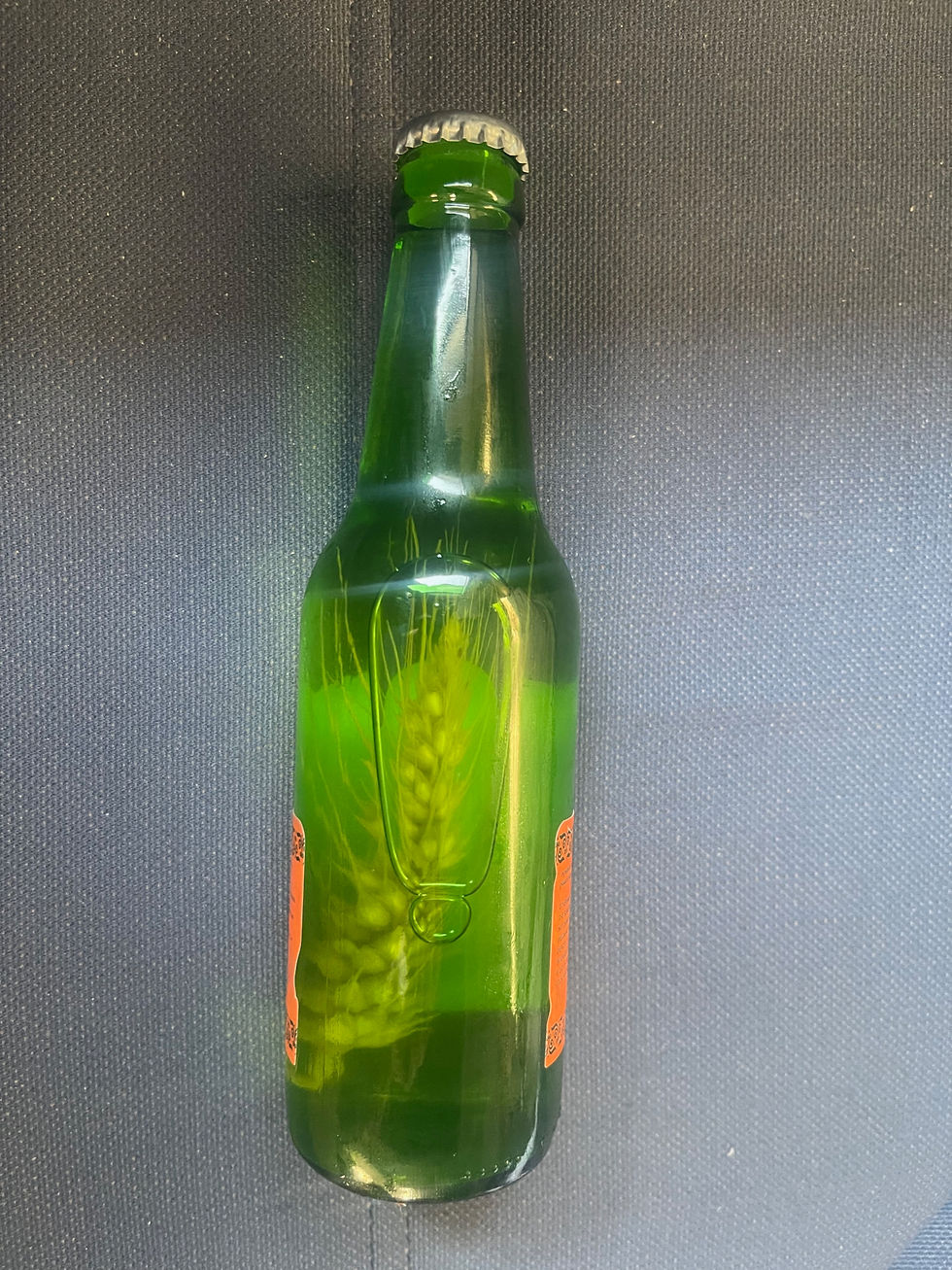
A symbolic photograph depicting modern South Africa.

What do you think?


After all the repairs were completed on the truck we left Cape Town and headed East, taking in Route 62 and the Garden route.


Leaving behind the mechanics' lovely dog, Dusty was hard to do.

ree

Along route 62, there is the famous Ronnie's Sex shop which despite its name, was a general store set up by ….. Yep, Ronnie. The other bit came after his friends decided to play a practical joke on Ronnie and painted the word sex along the side of Ronnie's shop already painted and it has now become a tourist icon, but we must off caught Ronnie on an off-day as the place was closed when we passed. Not that we were looking for sex or anything!


ree

The Iconic Ronnie sex shop. It's now a bar but it was closed when we passed by.


The Garden Route and Route 62 was for us, twee after being in gritty west Africa but enjoyable all the same, with lots of eating and drinking opportunities to temp a stray tourist or two.


ree

ree

ree

ree

ree

ree

ree

ree

Some of the attractive, manicured stops on the Garden route.

Well designed to capture the tourist Rand.


Next up was East London, and St Francis bay to name a few places where, after 21 years, I was able to meet old friends from Cradock Round Table. It's been 21 years since we all last crossed paths in a European Round table exchange to Cradock, but it was as though it was yesterday. Just the drinking was much more subdued this time around.


All that behind us and we headed for Lesotho. A small country that packed a big punch.

The mountains held some amazing treats and the local village people moved around by horseback with leather pouches on the horse's flanks to store their goods. As they passed us by dressed in their traditional blankets we were greeted with huge smiles and warm hellos, but boy, wasn't it cold up in the mountains.


ree
ree

ree

Wonderful Lesotho and the people of the country.


This way of life hasn’t changed for centuries, apart from the introduction of mobile phones of course. I think the scenery here is my favourite of the trip so far.


The mountains offered some wonderful views and whilst exploring, we saw various homes built in the traditional stone style with thatched roofs, but we became confused by some homes that were sporting a flag that was no more than a white plastic bag. Eventually, curiosity got the better of us and we had to ask what it meant. The particular family we asked couldn't have been more friendly and laughed out loud at these two daft tourists asking such a question. The answer was simple, the white plastic bag indicated a Shebeen or unlicensed drinking den serving home-brewed Millet ale or similar. We didn't sample!


ree

Horses play a big part of Lesotho life.


Leaving Lesotho was not easy but we had to crack on and Johannesburg was on our sites.


We wanted to add a couple of new lockers to the truck and we had started conversations with several Aluminium fabricators in Jo-berg to make them (more shoe space for Charlotte) and I decided we would use one guy that had been quick in responding to my enquiry and sounded just the ticket to make our new lockers and he suggested we drove down with the truck to get measured up and agree on a cost.

When we arrived at the workshop, it was in the middle of the Hood and we stood out like a sore thumb. The area was called Regent Park but I hasten to add, not like the Regents Park that I know. This was like something off the movies.


Djomo, the owner was outside and greeted us. The temptation to drive off was very strong but we bit the bullet and smiled through gritted teeth.


Djomo spent a few hours measuring and head scratching whilst we stood with our backs to each other hoping that we had all bases covered in the event of an attack! But as time passed, we started to relax and to our surprise, people started talking to us and asking about the truck.

Everyone was really friendly and not at all scary. They told us they were the good guys and the Nigerians down the street sold the hard drugs and to stay away from them but the local weed dealers came and chatted and even posed for a photo.


I asked why they moved around in a pack as they all wanted to sell their weed and how did that work as a group? The answer was simple, they worked as a type of Co-operative and moved around as a group for safety as they carried products and cash and so to work together made much more sense.


Eventually, Djomo finished his measuring up and we were free to go until he had the materials ready.


ree

Djomo measuring up for the new lockers.


When the materials arrived, we headed back to the Hood to start work and en route, the truck developed a grating noise coming from one of the wheels on arrival we removed the offending wheel to find we had damaged the studs holding the wheel in place and that day was the start of a Bank Holiday weekend.

ree

The lockers under construction


The truth soon dawned on us, we were stuck in Djomo’s yard until the shops opened again 4 days later. You couldn't make this stuff up. Honestly.


Djomo reassured us we were safe and he had a night watchman in place who would protect us.


ree

Guys on the street corner just hangin'

ree

A small fruit and veg stall typical of any African street.

ree

The local weed dealers posing for a photo.

Djomo told us he had worked in the area for 15 years since coming into South Africa from his native Cameroon. He told us he had been robbed 7 times in the first 2 years of opening his workshop and how he had told his father he was going to find the thieves and punish them (he is a big strong guy) and his father had told him two leave them alone as if he took revenge, the thieves would surely kill him.

ree

Just an everyday scene from the Hood.

ree

ree

The truck starting to gain some interest.

ree

They are rough, tough streets but the people are so nice.


He told us how he took his father's advice and carried on working hard and ignoring the break-ins eventually they left him alone and he became a respected member of the community locally and he told us that's why we would be okay.


The following day Djomo came to work despite it being a bank holiday and worked all day on our lockers. As the day started to fade, his wife and various friends started to arrive and we were invited to an impromptu BBQ, Cameroon style with the meat being cooked on an open fire and then roughly cut up as everyone ate with their fingers and no one was sure if the sauce was Cameroon style mayo or axle grease and nobody cared. These guys took us into the world and their hearts and much alcohol were also consumed by one and all.

ree

A last stir of the sauce before the meat is cooked.

ree

Everyone awaiting their food.

ree

I am sure they had sanitised the newspaper before putting the meat on it.


ree

Djomo and I spoke of our fondness for Whisky and, of my love for Irish whisky and suggested I went to buy a bottle from the local liquor store. Djomo insisted he chaperoned me and fleeced me to ensure my phone was left in the compound and all other valuables. Just in case ????


On our return, all the men mixed the Irish whisky with Coca-cola and ice and said they liked Irish whisky too. This wasn’t quite how I wanted them to taste a true drop of Tullamore Dew, but never mind.

We survived the weekend and have many new friends as a result.


ree

We even got serenaded whilst the meat was cooked.

ree

That's how to prepare meat?


The lockers were completed and Charlotte now has more storage for her shoes and I have more storage for my tools.

ree

A parting gift to us from Djomo and his family. A fish-prepared Cameroon style.


All well that ends well.


The road north was now beckoning and it was time to go. We headed for the Botswana border and on to the next part of our wonderful adventure.

 
  • Jun 11, 2022
  • 7 min read

We crossed the border from Namibia heading for Cape Town one sunny afternoon and wild camped on a farm up in the mountains and miles from anyone, apart from, that is, the farmer, who saw our windscreen reflect in the sun and came to investigate. He was cool and said we could stay. The ensuing conversation revealed he had several thousand acres and this type of land sold for around £50.00 an acre in northern South Africa (SA)!

So we had made it to the most southerly country in Africa. South Africa, the land of Sun and wine and …. more wine really.


Anyway, what a change from what we had experienced. Tarmac roads, big smiles and beautiful food and wine, did I mention the wine?


Within a few days, we hit Cape Town and loved it.


The wine farms were everywhere and we were in heaven.


ree

The Vinyards or Wine farms as the South Africans call them are stunning.


We didn't rest on our laurels though, we got stuck into a few maintenance jobs for the truck that kept us stationary for several weeks, but we had wine……. The vineyards are divine and ambling around, lunching and quaffing became the new norm as the truck maintenance rumbled on, and we made new friends, of Black, white and coloured ethnic groups. And yes, that is politically correct, in SA to say those words?


One place we laid our heads in Cape town was a municipal campsite near the city centre. Not a pretty place but super easy to get into town. There were many long-termers on the site in caravans and tents that had seen better days but we were learning many white SA people had been displaced over the years and this type of living was the norm for many whites now.


A young kid around 9/10 years old, the son of a family staying on the site took a shine to our truck and befriended us straight away and after a while, he asked if we were to stay on the site permanently. I said no, and asked if his family lived there permanently. His response was, “We have been, but we leave on Monday at 10.00”. I asked why 10.00 and his response, “we are being evicted and we don't have anywhere else to go”?

A grim reality check on life for some.


So, digging a little deeper into SA and the economic situation, there appear to be 3 main groups in Cape Town at least.


Whites live mainly in the better property. Guarded and gated.


Coloured and Black people live in brick-built, but sub-standard housing in the suburbs.


The ‘other’ Blacks living in the tin shack Townships


The first two groups are what they are, but the third group, the ‘other’ Blacks are mainly migrants from Bostwana, Malawi, Zimbabwe etc who had come to SA in search of work. They are illegal, but, these countries supported SA during Aparthite and so the SA government turns a blind eye to them being there and they survive by working and I mean working. Doing the jobs no one else wants to do, or simply won't do.

They turn up early and leave late. They are in demand and they are cheap?

Another slant on the current situation is, If you are white, middle-aged and unskilled or semi-skilled, forget trying to get employment. The government set targets for companies to employ black people ahead of whites.


To understand that statement you also must understand blacks outnumber whites 8 to 1 so this policy probably has cudos?


And now a little light relief from a thorny subject.

The Penguins of Boulders Bay - So cute!


ree

ree

ree

In a similar vein, I heard of a Black girl with a top-class degree, who recently graduated from University and could not get an interview in her chosen field in desperation, she changed her name on her C.V. to a white SA male name and had numerous interview offers? She went to one interview and explained to the potential employer her reasons for her actions and Bingo! She had a job.


Charlotte and Amos. Amos was the guide that showed us around the Townships of the town of Cradock In the Eastern Cape.


ree

An example of a justice post erected in a garden. This is the place the family go to discuss and resolve their issues.

ree


Another oddity I found out was

, that some Cape Town women (Balck and coloured), still remove their 4 front top teeth. This is thought to be a fashion statement or, a move to enhance sexual enjoyment for their partner? It has even been outlawed for dentists to make these extractions and so it is now performed at home!


We also learnt in the Black culture, Tradition is everything, young men are still taken at puberty and the father selects a male in the community to circumcise the boys. They are taken out of their home, put in the forest and circumcised.No anaesthetic, no cleaning of the blade.

The next day the father visits his son to ensure he is okay, and then he is left for a month and comes home a Man. We saw similar in Senegal, but that was even more brutal.


Funerals amongst the black community are paramount and the show of a good burial is a real status enhancer. To this end, families borrow money to perform the best send-off they can and this leads to difficulties later down the line.

In many Black people's gardens, there still stands a pole sporting a cattle’s skull where the family or friends can stand to sort their differences. Tradition is everything in these communities.

Diffrent communaties, different values.Different traditions.


ree

ree

ree

A typical Township house but this one with a beautiful garden.

ree


ree

Christianity is very well supported throughout South Africa with many significant churches.


Whilst waiting for our jobs to be completed on the truck, we learnt a little more about the Afrikans language is spoken by around 13.5% of the population and is somewhat based on the Dutch Language and it was time to learn a few snippets


Elke huis het sy kruis


English translation - Every house has its cross

Thinking about history, it's a profound statement.

Lyk ny boem groot hierin


English translation - Does my bum look big in this?

Well, you never know?


ree

ree

ree

Some super cute places to browse in this melting pot of a country.


We learnt about Load shedding. The process of the power from the grid being turned off for 2 or 3 hours every day to save power. This was causing untold damage to businesses and households alike. Think of being in a city centre and someone turns off the traffic lights? Think about Hospitals, schools and shops and Load shedding has been going on for years.


We learned security is a major worry among SA people and we are honestly not sure if this is warranted or not? We have felt safe so far in the main.


We learnt how to Braai (BBQ on burning or smouldering wood). You simply aren't a white SA unless you Braai many times a week!


We also learnt some facts about the ANC (African national congress), the incumbent political party in SA. The party of Nelson Mandella, still in power and the common view amongst whites (as we spoke to), a party doing little for any ethnic group?


ree

A Donkey boiler on a rural campsite. You light the fire under the boiler and that heats the water for your shower. It was a quick dip though as the shower block certainly wasn't heated!

ree

2 cuties we met and who were more than happy to share our BBQ ....... or was it a Braai?

ree

We met this handsome guy on a beach of all places and he was happy to pose for this photograph.


ree

Just Chillin is all.


On a similar theme, we went to Robyn island, the place Nelson Mandella was jailed.


You are taken on a tour of the island and shown the place Mandella was held. Your tour guide is an ex-inmate, so someone of real knowledge.


Now, I was under the impression Mandela was held in solitary confinement during his time in prison but apparently not. Mandella had access to other prisoners, sports facilities and even a garden of his own.


That all said, he had his freedom taken away and that can never be rectified.


The visit to Robyn island-inspired us and we wanted to know more so we embarked (when we left Cape Town) on visiting the Nelson Mandela Museum at Mthatha.


Ironically, as we approached the town, we were stopped by the police and informed there were riots taking place and what was our business in town? We told them we wanted to visit the museum. Their retort was to offer us an escort there.


Once we arrived, we were parked directly in front of the building and the police instructed all security staff to guard our truck. We felt humbled and on entering the museum, we realised we were the only visitors?


The contents were mainly copies of posters and poorly made statues of Mandella and his colleagues. Not at all inspiring, I'm afraid.


So, what have we learnt so far from this country?


Diversity for a start. So many factions pulling in so many ways.


My understanding is, that Whites tolerate Blacks and Blacks tolerate Whites.


Both have their own cultures and so it should be (in my opinion)


The colours don't mix (including coloured's and Blacks), they prefer their own company although I am told this is changing with time and education.


The whites have the upper hand and hold most of the aces (fact, not a nice one but the truth). Hopefully, the tide is changing but we will see.


SA is a really interesting mix and we have just removed the lid. With the truck almost on the floor due to the weight of all the wine we bought, we head East now and who knows what we will discover.


South Africa - Simply amazing and we ain't done here yet!


ree

Can we make it?

ree

District 6 Museum. Cape Town. An area of Cape Town where all inhabitants were moved from the area for development. Mainly a Black area at the time and is now a trendy/Arty area.

ree

A beautiful morning.

ree

The entrance to Robyn Island prison.

ree

Some rare and beautiful Pansy shells were found on a beach. Rare, but Charlotte found 3 in one hit!


ree


ree

I took this photograph in the Nelson Mandella museum. Interesting words?


A few facts to finish.


If SA was 100 people


80 would be Black

9 would be Coloured

8 would be white

2 would be Indian /Asian


80% of the population are Christian


Population per Sqm


SA 44

UK 264

USA 33


Angola, what a country.


Whatever it was about the country, we loved it and enjoyed our time as we were blessed with sun for most of the time of our visit but all good things come to an end and so when we approached the border to cross into The Democratic Republic of the Congo, it was with a little scepticism as the heavens opened and water cascaded down the roads and pavements.


I remember watching a street vendor cooking her food with rivers of water running over her feet whilst she stirred the boiling broth she was preparing as though it was normal.


Leaving Angola was much easier than arriving and as we drove through the gates and into no man's land, the rain seemed to intensify as loud cracks of thunder all around us made us jump.


The thunder was followed by a huge thunderbolt hitting the floor quite near us - very scary.


I have attached a small video as Charlotte managed to capture the event (excuse the language).


At that stage, we didn't realise we were entering a real-life wild west show.


We had been warned not to wild camp under any circumstances. We were told, It was just not safe to do so and as we left the border post, it was already midway through the afternoon and it was a long drive to Kinshasa the Capital, our intended destination and we knew we couldn't make it that day. We needed somewhere to stay en route, but there are no campsites in the DRC at all……


It soon became obvious that the DRC had little infrastructure so options were limited so breaking one of our golden rules. DON'T DRIVE IN THE DARK. We had no choice, no factories to park up next to and no police stations, no Hotels, nothing, so on we drove.


The roads were, like much of Africa, appalling, with large potholes and areas of no tarmac at all. The driving of the cars and lorries were undoubtedly the worst we had seen anywhere in the world bar none!


Most cars had someone sitting on the bonnet or roof, as did the lorries. Cars and lorries overtook at speed regardless of anything really. It was shocking.


We soon lost count of the number of wrecks that were abandoned on the roadside. We saw at least two vehicles that had just been involved in accidents in the first two hours of driving. We saw lorry cabs smashed as two lorries had collided together.


As the night drew in we slowed right down when a minibus containing around 20 people hurtled past us at a breakneck speed. The driver, not knowing as he pulled in, there was a broken-down car just ahead. He tried to swerve out again and rolled the vehicle right in front of our eyes. The windows fell out of the vehicle but it ended up on its wheels after rolling 3 times.


We shone our headlights and everyone seemed to be alive and then the driver jumped out of the vehicle and ran at speed into the thick undergrowth at the roadside never to be seen again.


We froze for a short while and then as hard as it was to do, we drove on.


Being white and a tourist, we would have been implicated and the consequences could have been ??? Whatever it would involve us shelling out a load of money anyway and probably worse.


ree

ree

ree

ree

ree

ree

Eventually, we chanced upon a hotel with a walled-in area and agreed on an exorbitant fee of $40.00 to park for the night but we were happy to pay.


They use American Dollars in the DRC as their currency is so devalued, that you would need a wheelbarrow full of it to buy bread!


The next day we followed a lorry in a traffic jam up a hill and a guy followed the lorry and every time it stopped, he put a brick under one of the wheels as it had no brakes.


Getting to Kinshasha the capital came as a relief. A complete contrast to the rest of what we had seen so far. Another shinney, modern city but with an undercurrent of something sinister in the air.


The accommodation was a little easier to find, so we settled on a large 5-star hotel and paid $50.00 a night for the privilege of staying in their car park.


The Hotel had its own armed security force and several armed Policemen patrolling the fences so we felt safe.


As we settled in, the head of security for the hotel approached us with a policeman.

They enquired if we were okay and if we felt safe. We said we did and all was well.


They then asked if they could see where we kept our guns for their records. We told them we didn't have any guns and after a brief exchange between the two men, they laughed and looked at us, as though to say “Stupid tourists!”


It wasn't all bad. We spoke with most of the staff who wanted to see our truck and others visiting the hotel. Everyone was friendly and pleased to see tourists but warned us to be vigilant and not wear jewellery, take little cash and no cards and not to take our phones when we went out.


One guy we spoke with, spoke about the embarrassment of the African people at the Migrants trying to escape to Europe.

“Why do they go,” he said. Europe has few natural resources and we have Oil, Gold, Diamonds and a plethora of valuable minerals in huge quantities. Why don't they stay and benefit from what we are blessed with?


ree

ree

ree

ree

ree

ree

ree

ree

Hotel guests checking out our truck in Kinshasa - The DRC capital.

ree

ree


Our time in Kinshasa was short. After a taxi ride and a boy sticking his hand through the window of the Taxi, trying to steal the $4.00 taxi fare (unsuccessfully), from my hand, we decided to move on.

We wanted to take the ferry to the Congo.


The Congo is just a few hundred meters across the river. You can easily see the other side.


We were stamped out of the DRC and awaited the ferry, then came the news we couldn't use the ferry (due to our size) and needed a private barge and that was going to be $1000.00.

We weren't overly polite and we turned around and headed south, we will save the countries further north for another trip someday as we headed south.


The long slog back to the Angolan border was a long drive and we knew we needed a stopover somewhere, but where? As we drove we chanced upon a large haulage yard. Not pretty, but safe and protected by 3 armed guards and walled in. We gave it a try and pulled in and asked if we could stay the night. The answer was thankfully yes.


The manager was happy to have company for the night and gave us sweet Coffee and fruit to eat.


I have to mention this guy (Bahsoon), he was born in Sierra Leone to Lebonese parents and now lived in the DRC. Twice married and twice divorced he devoted his life to his work and his beautiful daughters of mixed race.

He was fascinating to talk to and was a wealth of knowledge. Bahsoon explained the locals have little regard for life and theft is almost mandatory due to the poverty levels caused in the main by corrupt Governments. Farming has just about ceased as the farmer will tend his/her crops only to have them stolen just as the crop is ready. Anarchy rules the DRC.


The east of the DRC is covered by vast rain forests and Oil is huge out that way. We were told these areas are totally unpoliced and not to venture out that way.


Bahsoon told us about hardwood timber being logged at an alarming rate, that was bound for China.

He said they average around 30 loads a day,7 days a week.

We counted an average of 6 trees per load on the lorries we saw - You do the maths!


ree

ree

A young guy tends his shop.

ree

More Timber bound for China.

ree

Now that's a load!

ree

ree

Using a brick for brakes - Tidy!


We left Bahsoon the next day and made the border unscathed, we wished we could have stayed longer.


To sum up. The DRC was an experience and not a good one. Not a place I want to return to either.


The cross over back into Angola was a great relief and we quickly headed south through Namibia to South Africa and drank Wine!


DRC Facts


Population 89,000,000

Congo River is the world's second-largest river by volume.

The DRC accounts for the majority of the Congo and the DRC’s 178 million hectares of rainforest.

Life expectancy 65 years old

Main exports - Refined copper - $11 Billion annually and Cobolt Oxide -$3 Billion.


ree

ree

Another wreck. One of dozens we saw.


ree

ree

ree

See the legs sticking out from the Hurst.

ree

Battsoon. A guy of great interest to us. Serving us sweet coffee in his home.

ree

ree

Not the prettiest, but a good safe place to stay in a haulage yard with 3 Armed guards.


ree

Thankfully, we didn't need medical attention!

ree

A container lost from a lorry.

ree

ree

ree

ree

ree

ree

Another load is bound for China.


© 2022 Sommertravelling

bottom of page