


- Jun 2
- 11 min read
Updated: Jul 28

“Tourists don’t know where they’ve been, travellers don’t know where they’re going.” — Paul Theroux
Well, we did get out of the Far East, but leaving Malaysia wasn’t that easy.
We got bumped off three sailings due to “shipping issues”. That’s the phrase everyone uses when no one wants to explain anything, and you are expected to smile, rebook flights, find accommodation, spend more money, and generally pretend it’s all part of the adventure.
It wasn’t.
The truck was packed and ready for shipping, so staying in it was no longer an option. We ended up in Airbnb’s, killing time, checking emails, chasing agents, and trying not to go mad. The truck finally got afloat around three weeks late, and we flew back to Spain for a break whilst we waited for it to cross the world without us.
Our last leg was waiting. The Americas and Canada. The journey to the end.
Before we left Spain, I picked a couple of lemons from one of our trees. They were going to be for my G&T and a small reminder of home. On landing in Chile, I had a feeling and dumped them. Shortly afterwards, we passed through an inspection area complete with sniffer dogs looking for fresh fruit and vegetables being brought into the country, with hefty fines for anyone not obeying the rules.
So there we are. International smuggler of lemons narrowly avoids justice.

We booked an Airbnb whilst we waited for the truck to arrive, and I was very proud of myself
because we could look out onto the port from our rented apartment. On the day the truck was due, we watched the ship’s progress on an app and even got up in the night to watch it arrive. I can’t tell you how we felt when we watched the ship cruise past the port on the app.
That was when we discovered we were looking at the wrong port.
The truck was arriving into Valparaíso, and we were looking at somewhere else entirely. It was one of those moments when all the planning, all the apps, all the cleverness in the world, still leaves you feeling like an idiot staring out of an apartment window at the wrong stretch of water.
Once we got organised, we got the truck off the boat. That was a whole other performance, obviously. Shipping agents, port rules, papers, stamps, waiting about, and nobody quite telling you what is going on until you are already doing it wrong. But eventually we managed it. The truck was back!



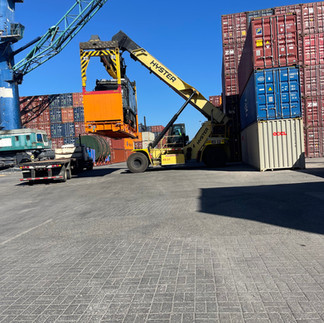

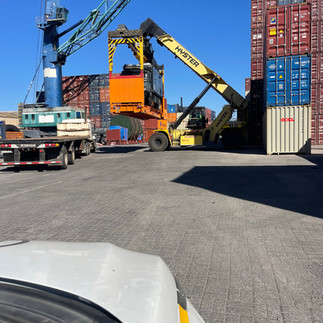

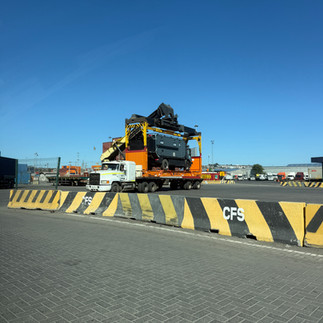

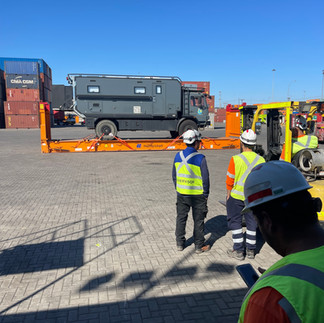
The truck in Port in Chile and repacking ready for the road.
We headed south towards Patagonia.
Now Patagonia is not a country, which I suspect plenty of people don’t realise. It is a region across the bottom end of Chile and Argentina. Why it’s called Patagonia, I have no idea. Someone will know. I don’t.

What I do know is that it has been sold to the world as remote, wild, beautiful and almost mythical, and in places it is exactly that. Vast blue lagoons, mountain ranges going on forever, open land, cold air, big skies and enough space to make you feel very small.
We had read about an amazing drive to a quaint, lonely village called Villa O’Higgins. It sounded just our sort of thing. A long drive, bad roads, somewhere awkward to get to.
Perfect.





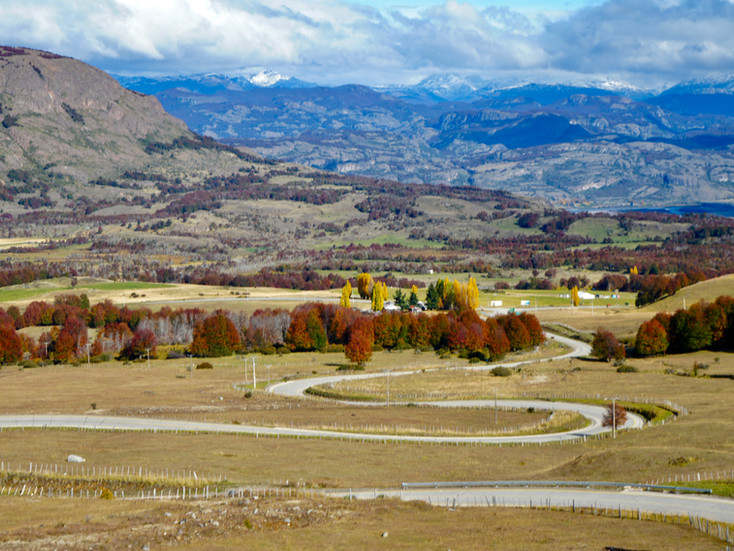



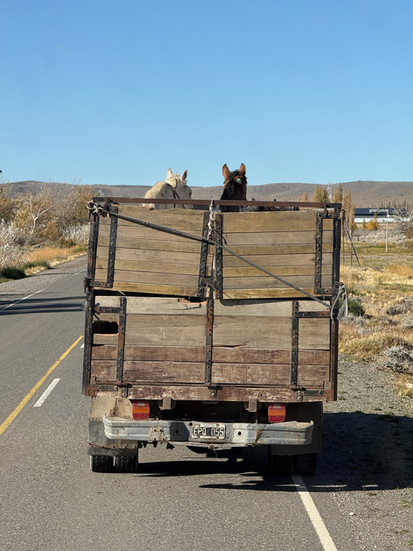


The scenery was stunning between long drives of nothing
We got about a quarter of the way there when we had another blowout. Our fifth so far.
We changed the wheel and found a campsite, ordered tyres and waited. When they arrived, we got them to a garage. The guys set about fixing the blowout and changing another tyre, and then came the blow. We have split rims, and they have a sealing ring.
“Where is the ring?” they asked.
We looked at each other.
What ring?
They rang around and said they could order one from Colombia, but it would take a couple of weeks. Panic set in. I wanted to weep. Not in a dramatic way. Just in the quiet, tired, overlanding way when you can see another chunk of your life about to disappear because one bit of metal has vanished.
Then Charlotte announced she knew where it was.
I may have challenged the logic of that statement.
It was on a random motorway in Chile. We didn’t know it was missing until the tyre fitter asked for it. We were in a foreign country, on roads we didn’t know, with traffic hammering along and no sensible reason to believe anyone could remember where a small metal ring might have fallen off.
I was thinking, no chance. How can she possibly know that? I had no idea, so how could she be so sure?
But Charlotte had remembered the sequence. The ring must have come off when we changed the wheel. We had been on the motorway, then come off at the next junction. She recognised the area near the garage as where we came off. She remembered an incline, a bend, and rock formations at the side of the hard shoulder. I still thought it was nonsense.
An Uber was summoned. The driver took us back along the motorway, and we got out where Charlotte thought it might be. She walked up the hard shoulder. I ran down it. Lorries and cars thundered past, and there we were, two idiots hunting for a tyre ring on the side of a Chilean motorway.
Then she found it.
Pure elation. Pure disbelief. And I was in awe of her ability to remember such things.
She hasn’t mentioned it since, obviously.
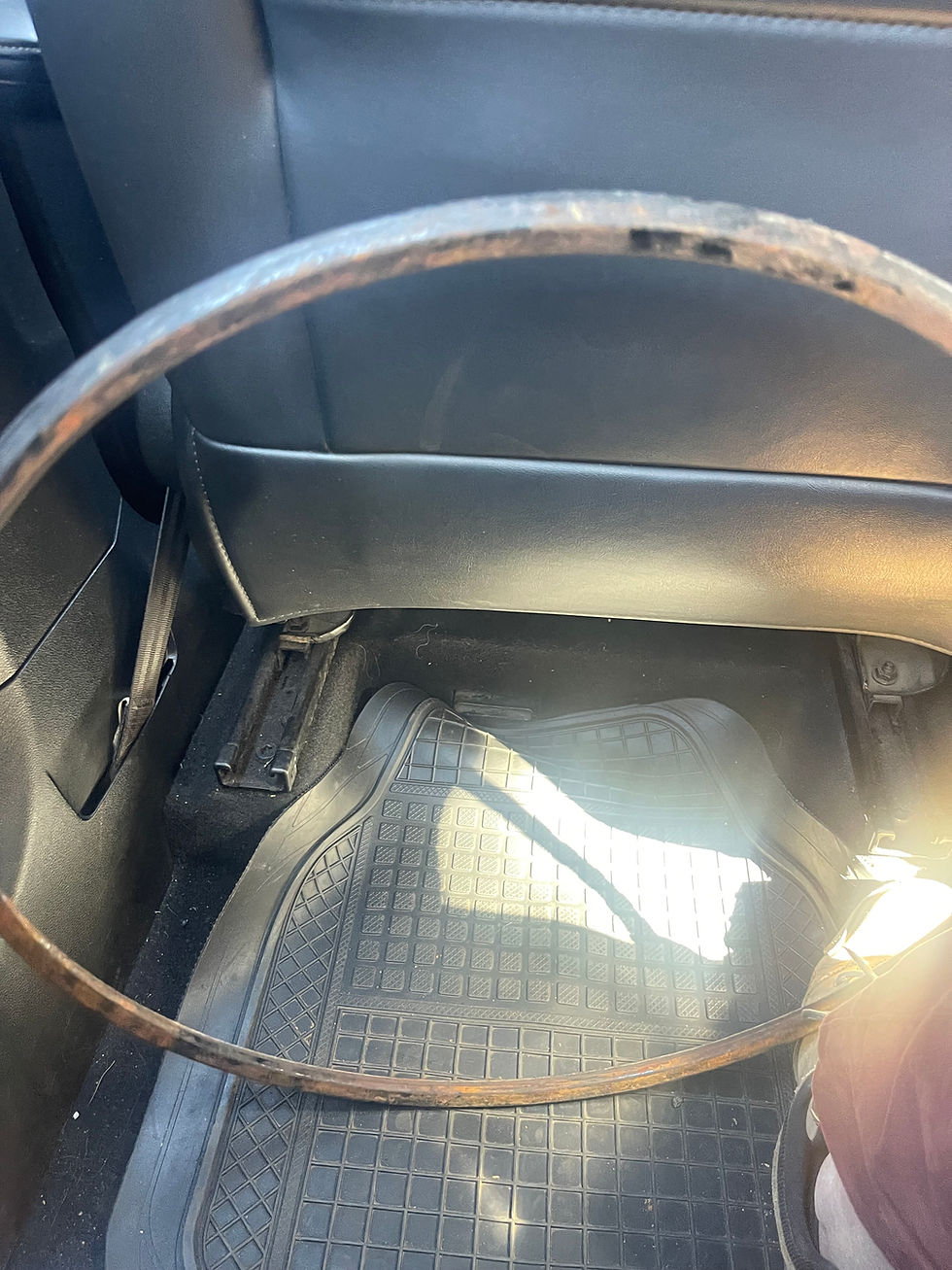
Safely collected and in the back of a taxi, the wheel ring. Never have I been so glad to find a bit of Metal.
We carried on, but by then our appetite for the Villa O’Higgins mission was fading. We got as far as Chile Chico and realised the roads were disintegrating, the journey south was becoming more and more of a slog, and Villa O’Higgins itself was starting to sound less like the remote end of the earth and more like another tourist destination wearing a remote hat.
I had read more about it by then. Turns out Villa O’Higgins has an airport, and we had seen people wearing Villa O’Higgins T-shirts.
So not so random.
This is one of the odd things about travelling now. Places become famous for being remote, and then the remoteness gets organised, signposted, packaged and sold back to you. St Tropez was once a quaint fishing village where you could get grilled fish and a glass or two of wine on the beach. Last time I went, and we used to go regularly for Charlotte’s work, it was a money-making resort with bars, restaurants, overpriced shops and zero charm, in my opinion.
That happens everywhere.
The road mythologises a place before you get there, and then the place disappoints you by having T-shirts.
So, we turned back.


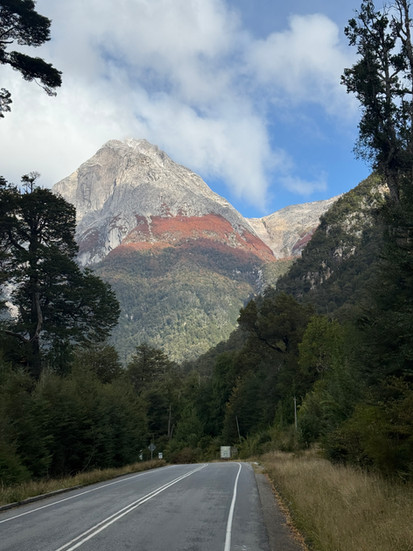

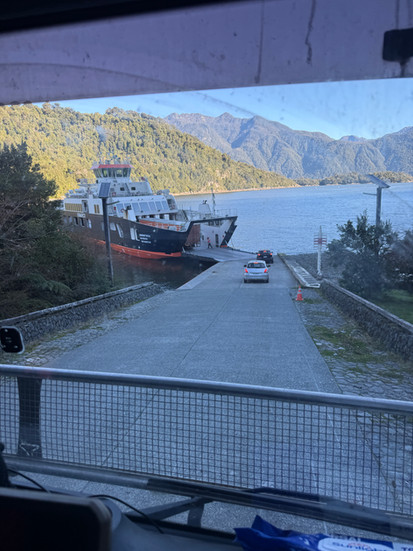

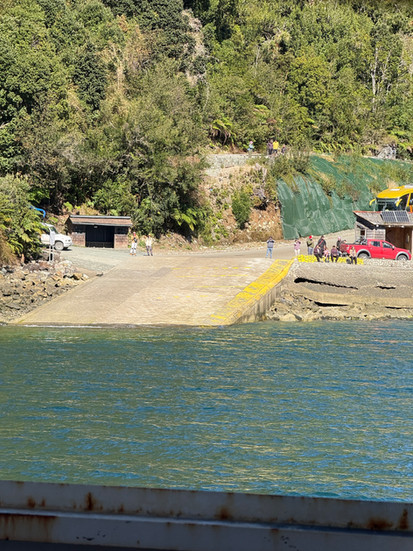

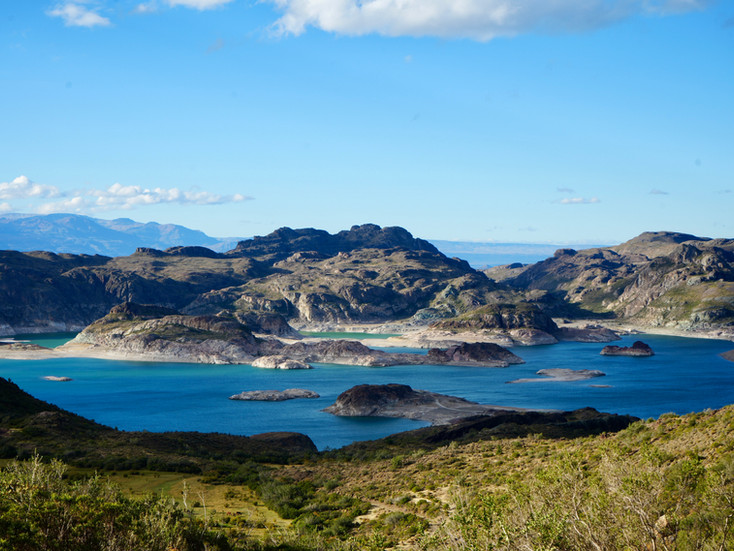

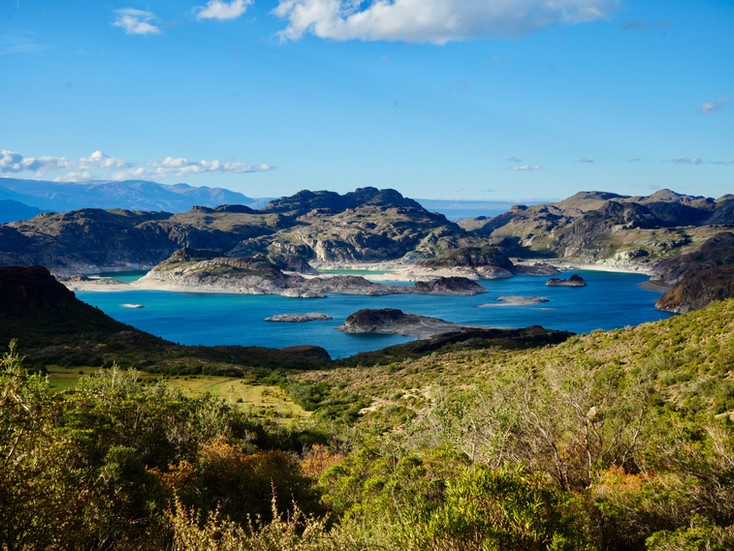

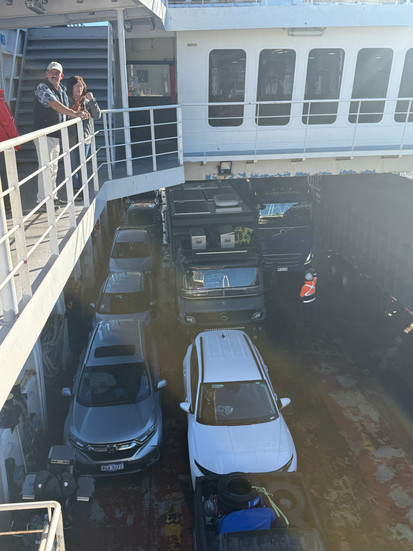
Some beautiful colours really turned our heads, but progress was slow and Ferrries were plenty.
We had spent time in Patagonia, and it was delightful in places. The blue lagoons and vast mountain ranges will stay with us. But we wanted to press on to Argentina.
There was also a lot of trout farming in Patagonia, and apparently, trout eat mice. No joke. It’s not common, but it does happen. I’ll leave you with that image.
Argentina felt different almost immediately. Both Chile and Argentina are vast and sparsely populated, but they did not feel the same. Argentina seemed more organised. The roads were better, although still crap. The people looked generally wealthier, and the houses looked more like houses than some of the shed-like buildings we had seen in Chile.
The first proper “we are in Argentina now” moment was probably a huge steak, empanadas, and the Argentine flags. They are everywhere. Big flags, proper flags, flags raised with pride. Nobody was being subtle about it. Argentina seemed wealthier, but still poor in places. More organised, but still rough around the edges. Beautiful, but not always in the way the tourist boards tell you it is.
One strange thing we started to notice was the shrines.
There were shrines scattered all over the place. Some were decked out with flowers and kept spotlessly clean. Some had photographs, small structures, personal belongings, bottles of water, and sometimes bottles of wine. We assumed many were road-death memorials, but we never confirmed that, and I don’t want to pretend we understood everything we were looking at.
What we did know was that there were thousands of them, and that is sobering when you are driving on foreign soil. Every few kilometres, another reminder that someone didn’t get home.
We were told that families and strangers leave water, wine and offerings as a mark of respect. Some of the sites looked deeply cared for, not abandoned, not forgotten. That part stayed with me. These were not just sad places. They were places still being visited, still being tended, still being loved.
Just a note: if I pass, leave me wine rather than water, please.

A bit over run, but this person wont run out of water on the journey to afterlife.


Some fancy designs for the shrines.
Our journey was now properly underway, and we went to Gaiman in the Chubut Valley, in Patagonia. It is home to a Welsh community that settled in the area in 1865, looking for religious and political freedom.
They maintain the Welsh tradition there, and although it is a bit twee, it was very interesting. Welsh flags, Welsh shops, Welsh tea houses, Welsh everything. It is also used to boost tourism for the area, obviously. Nothing escapes that.
It’s a shame we arrived on a Sunday when everything was closed. Afternoon tea is a big thing there, apparently. I made do with a glass of wine. Shame really.

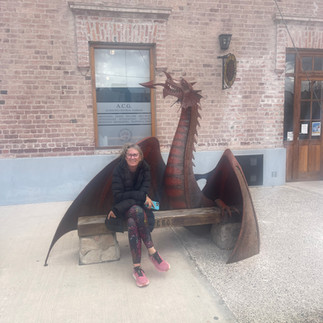

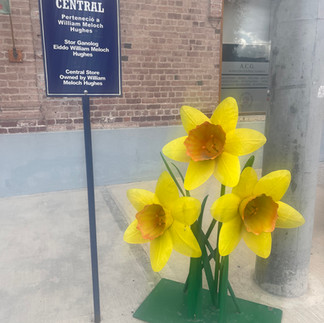
Welsh Daffodils, Charlotte and a Welsh Dragon. Thats Charlotte with the pink trainers.
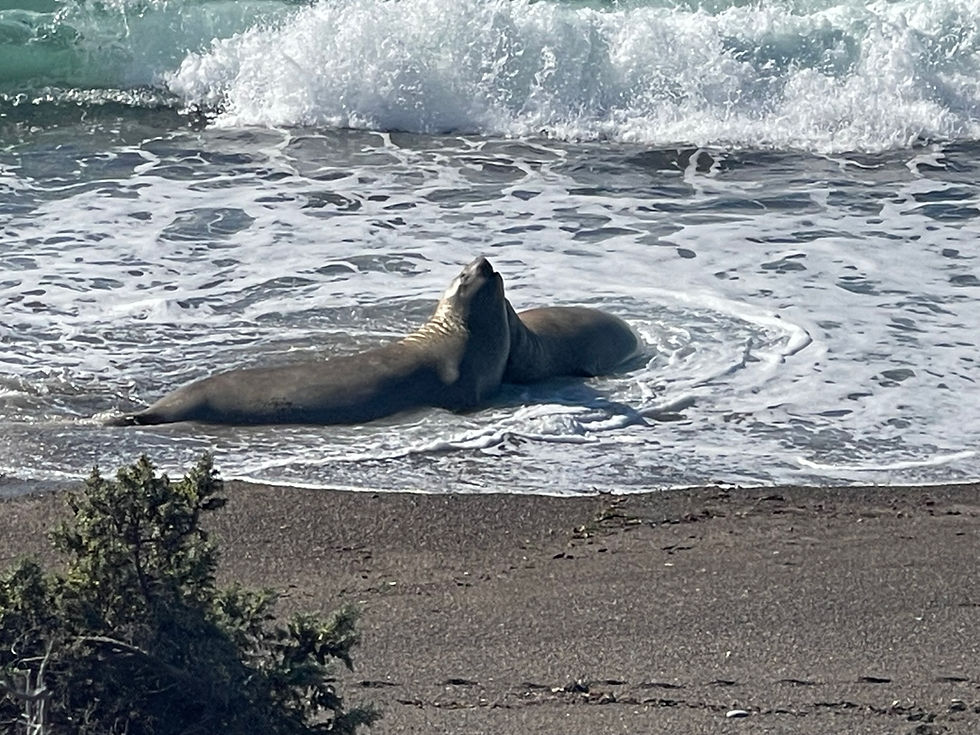
We also took a detour to Punta Norte to see Orca Whales beach themselves to attack sea lion pups. It is one of those extraordinary natural events that makes you wonder who first saw it and how much coffee they had drunk whilst waiting.
We were one of many standing there with flasks, binoculars and a strong will to see this phenomenon. There was even a board saying the last sighting of an attack was the day before we arrived.
Of course it was. After several hours, we gave up and watched it on YouTube. You can’t win them all, and at least the sea lion pups lived to see another day.
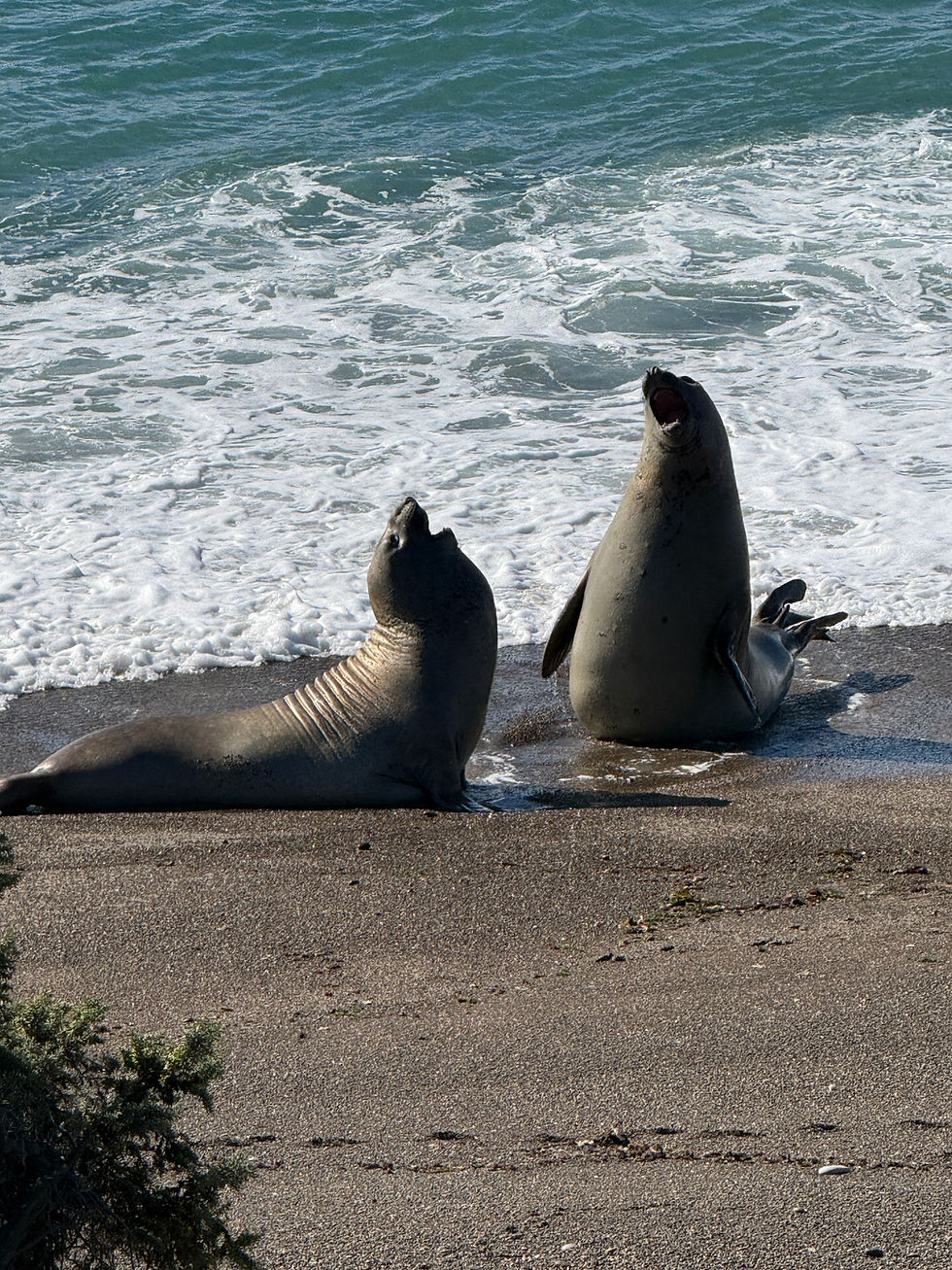
Our driving days were long. Very long. For much of the time, we saw little of interest. That is the truth of overlanding that doesn’t always make it into the romantic version. Sometimes you drive for hours and the view is not epic. It is just land. More land. A fence. A dead thing. Some scrub. Another fence. A shrine. A petrol station if you’re lucky.


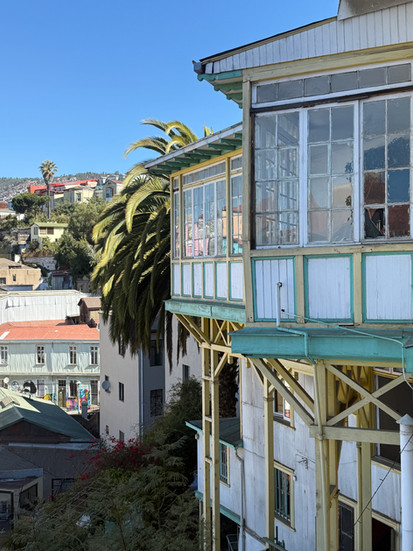
Valpariso in Chile. A colourful old town we enjoyed visiting
Eventually we came to Mendoza, the wine region. The wine was divine, but the area itself appeared unkempt and nothing like the beautiful wine regions of South Africa. Maybe that is unfair, but that was our impression. South Africa is a wine country with lawns, mountains, clean lines and long lunches. Mendoza gave us good wine and a rougher face.
That said, as we travelled north, the scenery became much more interesting. Small farms appeared everywhere, men tending cattle on horseback, dusty tracks, simple houses, huge skies and a real hillbilly feel that was extremely interesting and a great sight to see.
We saw the real people. They were not especially friendly. They were okay, but compared to the Middle East or most of Asia, they were not. That may sound harsh, but it is what we felt. In some countries, people wave, smile, call you over, feed you, ask questions, offer help, or just seem glad you are there. Here, people got on with their lives and let us get on with ours. Fair enough, but it was different.









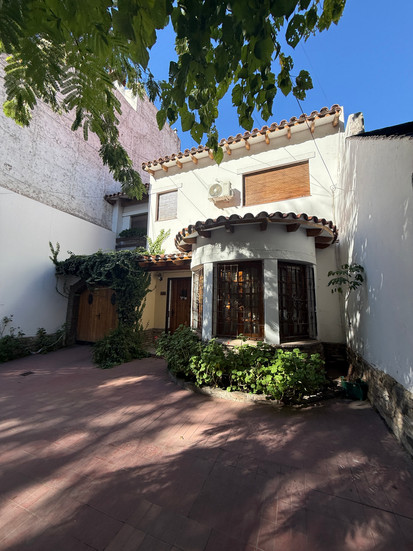


Mendoza. The photos dont do it justice.
One thing we saw everywhere was Mate. People in Chile, Argentina and Paraguay often carry a cup-sized receptacle called a Mate, with a metal straw called a Bombilla. They fill it with crushed Yerba Mate leaves, add hot water, sip through the straw, refill it, and pass it around. At home, in the park, at work, by the roadside, everywhere. It is not just a drink. It is a ritual. A social thing. A reason to sit together and slow down.

The Mate Cup. I didnt try it, I cant say it looked very appertising
In northern Argentina, we also saw people chewing coca leaves. This is not cocaine. It’s much milder, like drinking tea. I find these things fascinating as we move around. Not because I want to copy everything, but because these small habits tell you more about daily life than most tourist attractions ever will.
The staples were steak and empanadas. Small pastries filled with meat or cheese, and very good, although repetitive after a while.
But having an Argentine steak is on another level. Huge. Full of flavour. Served with a glass of Argentine red wine. A really delicious meal. We couldn’t finish a portion of steak between us, but it was damned good.
The further north we got, the better the scenery became, and we spent time on Route 40. One of the longest roads in the world, it runs for around 5,000 kilometres along the Andes. Without checking too hard, I’m sure we will meet it again further north on our journey.
Route 40 is one of those roads that means something to overlanders. Not because every kilometre is wonderful. It isn’t. But because it goes on and on and on, and you feel the size of the country through the wheels. Some roads are not beautiful. They are important because they carry you through.
The north also showed us huge farms and cattle ranches with massive gated entrances, but so big that the houses were not to be seen from the road. Just gates, tracks, land, cattle, dust and distance. We saw beautiful sandstone formations in Cafayate and had a lovely walk to view them. The colours and shapes were worth the effort, and by then Argentina had started to make more sense to us. Not friendly exactly. Not easy to sum up. But interesting. Big. Proud. Repetitive in places and then suddenly beautiful.



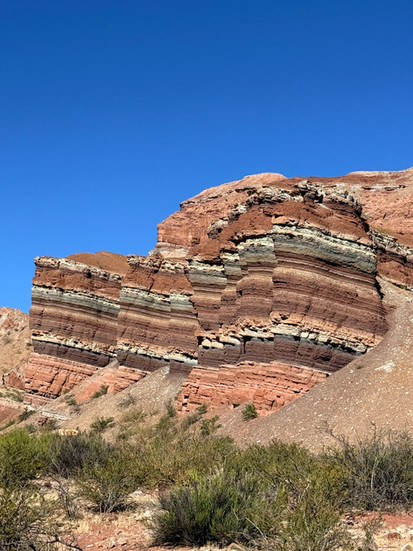


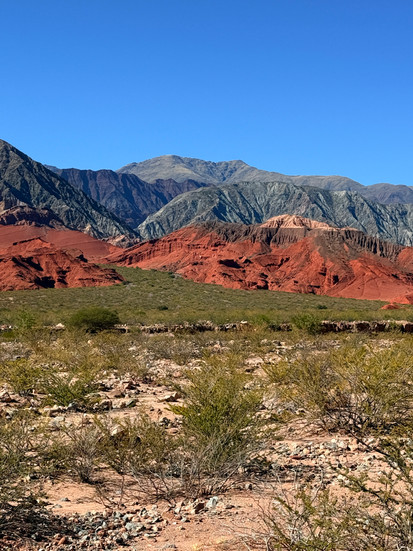

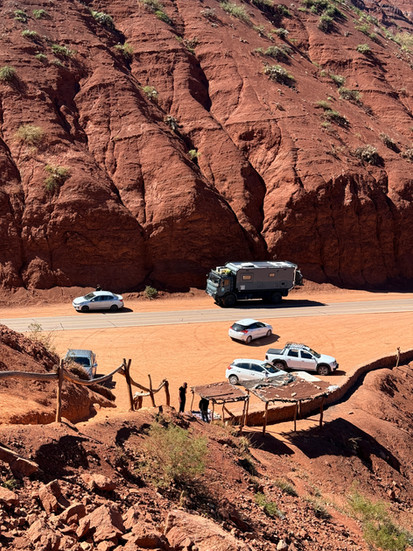



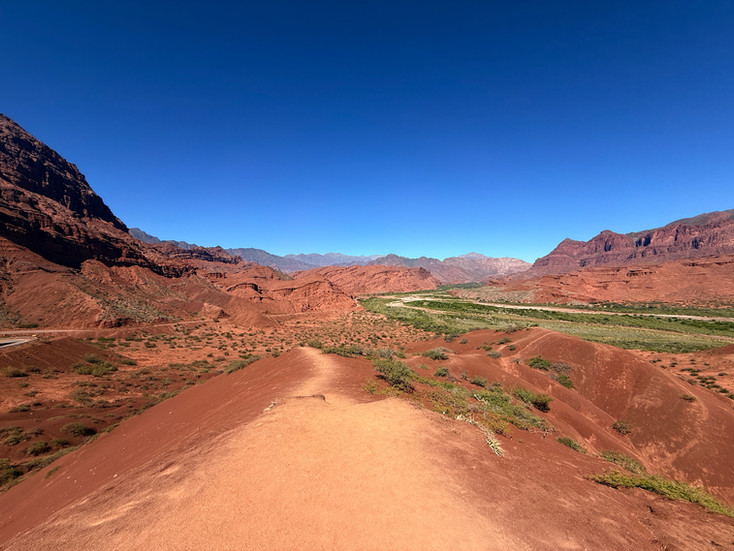
The beautiful scenerey around Cafayate
That was the start of South America for us. Wrong ports, split rims, Charlotte being right, roads falling apart, and Patagonia not quite being what the brochure promised, although it still gave us blue lagoons and mountain ranges we will not forget.
Argentina came after that: shrines for the dead, steak for the living, flags everywhere, Route 40 under the wheels, and a country that felt more organised than Chile, but still rough enough around the edges to keep us awake.
We passed very quickly into Paraguay, just enough to cross a corner of the country, stopping briefly in Asunción, the capital, before moving on to Brazil.
The final leg was properly underway now. Not neat. Not simple. Not how we had planned it.
But then it never is.
Thanks for reading, we hope you enjoyed it - if you haven't already, consider subscribing for updates on new blog releases.
....and if you want an insight into where we are and we we are doing in between blogs do check us out on Facebook.
Lost??
Catch up with our travels so far…
For the binge readers! Our new improved blogs start here...
Kazakhstan to Kyrgyzstan, on through Mongolia and Central Asia — chaotic borders, forced separations, visa dead ends, brutal heat, breakdowns, and the slow grind of overland reality trips the romance from the Silk Road
Other posts our readers loved...
A must read for those considering taken the road less travelled . Is this as scary as it gets? We certainly hope so!
Bribes, breakdowns, and flooded crossings. One minute it was dust and diesel, the next it was gangs, collapsed bridges and a demand for 1.25 million in “cash.”


